Portfolio
Curiosity · Reinvention · Lifelong Learning

A career built by following the next hard problem.

I started in computer engineering, moved into business and global technology leadership, left the conventional technology path for commercial diving and hyperbaric operations, taught myself a new analytics toolkit, and eventually came back to computing through AI. The route was not linear. That is the point.

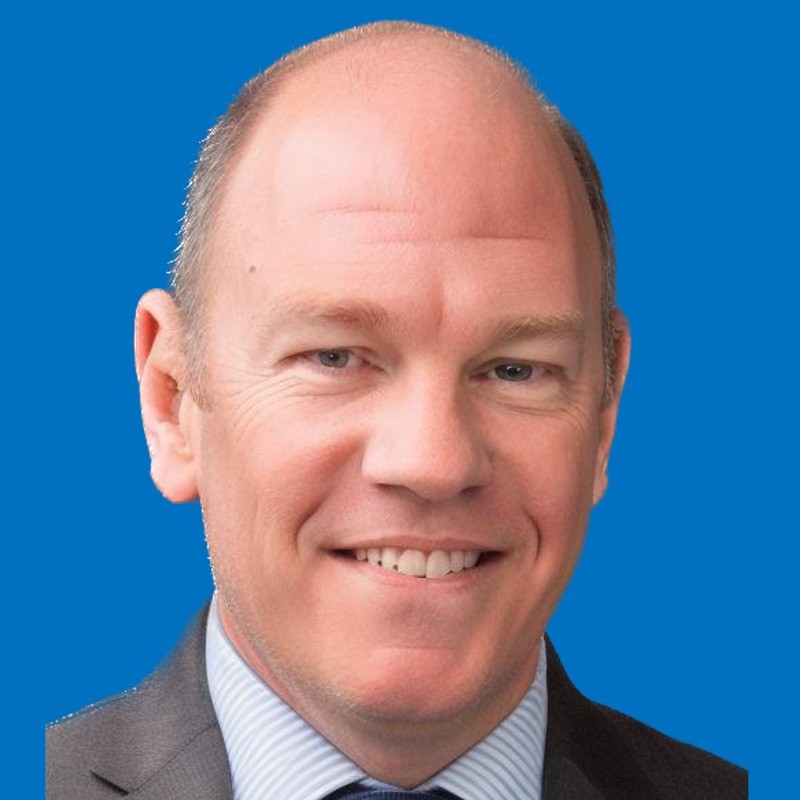
David “Dave” R. Rintoul

The trajectory

01. Computing foundations

I studied Computer Engineering at the University of Waterloo and began my career where technology met products and customers. At Siemens and Microsoft, the work quickly expanded beyond engineering into product strategy, platforms, partnerships, and the business mechanics that determine whether good technology actually succeeds.

02. Business, alliances, and program leadership

My early technology career became increasingly global and cross-functional. I worked across product management, program management, strategic alliances, licensing, engineering investment, and partner ecosystems. That period taught me to move comfortably between technical detail, commercial reality, executive priorities, and the people needed to get complicated work across the finish line.

03. Leaving technology for diving

Then I made a major turn. From 2009 to 2018, I worked in commercial diving and hyperbaric operations, including public aquariums in Oregon, Texas, and Florida and clinical hyperbaric programs. I managed safety, training, regulatory compliance, and operations where mistakes had immediate physical consequences. One assignment even took the work to Antarctica, where I was asked to develop dive-safety guidance for expedition operations.

04. Teaching myself analytics

Returning to technology did not mean simply picking up where I had left off. Analytics, cloud platforms, automation, and modern data tooling had changed the landscape. I deliberately rebuilt my technical toolkit—learning Python, data visualization, workflow automation, data lineage, graph technologies, cloud services, and the practical analytics methods I needed for real client problems. Work with WellCare/Centene, Disney, Evernorth/Cigna, and Charles Schwab turned that learning into production experience.

05. Back to computing through AI

AI brought the threads together. Today I build self-hosted and hybrid AI systems that combine software architecture, data, security, governance, product thinking, and operational discipline. My current lab and Voyages By Dave platform give me a place to experiment with agentic workflows, local LLMs, RAG, MCP, LangGraph, Qdrant, and the infrastructure required to make AI useful rather than merely impressive.
Geography has been part of the education

My path has crossed Canada and the United States, from an engineering education in Ontario to technology and operational roles across multiple U.S. states, then Florida, and now Abbotsford, British Columbia. I worked in East Germany as an intern on one of the first East-West joint ventures shortly after the Berlin Wall fell. That experience is where my international and language journeys began. Diving later created a very different relationship with place—from aquariums and clinical facilities to an assignment connected with expedition operations in Antarctica.

Moving between places, industries, and professional cultures has made adaptation a practical skill rather than an abstract one. I tend to learn a place the same way I learn a technology: by getting curious about how it works, what makes it distinctive, and what the people who know it well understand that outsiders usually miss.

Lifelong learning is the common thread

Learning by building

Much of my analytics and modern AI capability has been self-directed. I learn best when there is a real problem to solve, then go deep enough into the tools and theory to build something that works. Formal programs from Wharton, IBM, MIT, and DataCamp have complemented that hands-on approach rather than replaced it.

Languages and perspective

I apply the same curiosity outside technology. English is my native working language, I have developed conversational German and basic Spanish, and I continue to treat language learning as a long-term project. It is less about collecting fluency labels than about understanding how another culture organizes ideas and communicates them.

The pattern is not constant reinvention for its own sake. It is a willingness to become a beginner again when the next problem is interesting enough. Engineering, business, diving, analytics, security, and AI look like separate careers on paper. In practice, each one added another way to think about systems, risk, evidence, people, and decisions.