01. Computing foundations 1987–1992
Studied Computer Engineering at the University of Waterloo, including a 1990 co-op placement at DataPrint Robotron — one of the early East-West joint ventures in the former East Germany. Other co-op placements took me to the Canada Centre for Remote Sensing (Energy, Mines and Resources), GE Canada, Lockheed Canada, and Canadian Marconi.
The East Germany placement motivated me to work for an international company and learn German. I earned the prestigious Iron Ring at graduation and was later licensed as a Professional Engineer (P.Eng) in Ontario.
02. Business, alliances, and program leadership 1992–2008
Started at Nortel, then moved into product, program, and alliance leadership at Siemens and Microsoft — product management, strategic alliances, licensing, engineering investment, and partner ecosystems. Learned to move between technical detail, commercial reality, executive priorities, and the people needed to ship complicated work.
I moved from Siemens to Microsoft, then back to Siemens, then back to Microsoft — the kind of career that only works when you leave on good terms.
Relationships and a clean handoff matter more than a single decision.
03. Leaving technology for diving 2009–2018
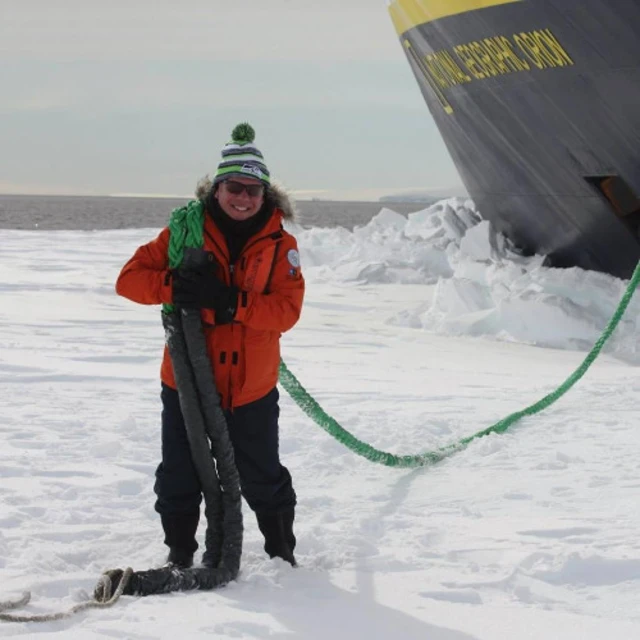
Led commercial diving operations at three public aquariums — as Assistant Dive Safety Officer at the Oregon Coast Aquarium, then Dive Safety Officer at the Texas State Aquarium and The Florida Aquarium — and ran hyperbaric programs first for American Hyperbaric Centers in Alaska — where I did my internship — and then for Accelecare Wound Care in Washington State. A contract assignment with Lindblad Expeditions took me to Antarctica. Managed safety, training, regulatory compliance, and operations where mistakes had immediate physical consequences. A zero-fail environment taught me risk management in a way a deck or checklist can only describe.
The move followed a stretch of burnout; the pay was far below tech, but the trade was easy: getting paid to float above tropical reefs among colourful fish, share the water with whale sharks, escort guest divers on shark dives — and dive with penguins under the Antarctic ice. The real goal was to become a diver medic, which meant working backwards through EMT certification and hyperbaric chamber operator training first — and I got there, earning Diver Medic Technician (DMT) and Certified Hyperbaric Technologist (CHT) credentials.
I also set a goal to become a top diving educator and worked through the ranks to PADI Course Director and DAN Instructor Trainer, training hundreds of divers and dozens of instructors. Along the way I ran my own company, Better Dive Pro, delivering recreational, commercial, and scientific dive training and instructor development — plus workplace first aid and CPR courses for both providers and instructors.
04. Rebuilding the technical toolkit 2019–2023
Came back to a different technology landscape. What I missed was impact at a scale beyond what solo or small-team work could deliver.
The energy around technology — and AI in particular — has been intoxicating, but it also brings a lot of misinformation and misunderstanding.
Confusion equals opportunity: the people who can articulate value propositions and technology stacks will lead the transition.
Relearned the stack through real client problems: Python, data visualization, automation, data lineage, graph tech, cloud services, and the practical analytics methods that make production systems work. Work with WellCare (Centene), The Walt Disney Company, Evernorth (Cigna), and Charles Schwab turned that into production experience.
05. Back to computing through AI 2024–present
AI is where the threads converge. Today I build self-hosted and hybrid AI systems that combine software architecture, data, security, governance, product thinking, and operational discipline.
The self-hosted route started as a way to be frugal, but it forced me to learn how disparate tools from different vendors fit together — deeper hands-on experience than buying API access and subscriptions alone would have given me.
Voyages By Dave and my home lab are where I experiment with agentic workflows, local LLMs, RAG, MCP, LangGraph, and the infrastructure that makes AI useful, not merely impressive.